Baptist vs Pentecostal: Key Differences in Beliefs, Worship, and Practices
Understand the main differences between Baptist and Pentecostal churches—theology, worship style, and spiritual gifts.
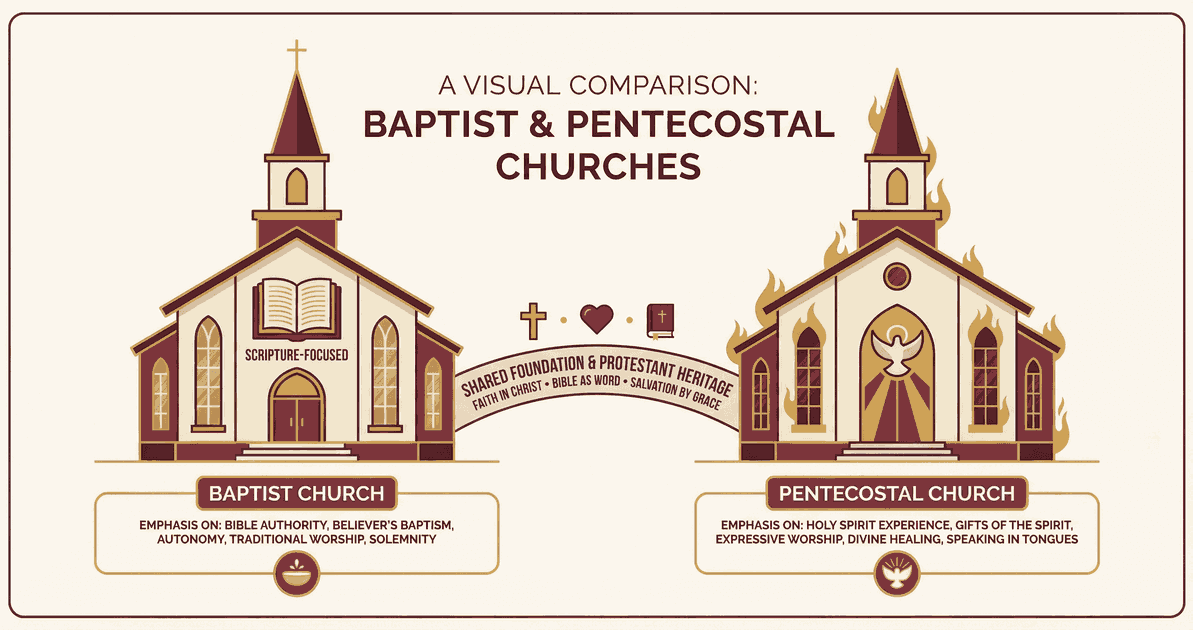
Baptist and Pentecostal are two of the largest Protestant traditions in America and globally. While they share core Christian beliefs, they differ significantly in worship style, views on spiritual gifts, and church practice. Here's what you need to know.
Quick Comparison
| Aspect | Baptist | Pentecostal |
|---|---|---|
| Spiritual gifts | Often cessationist | Continuationist (gifts active today) |
| Speaking in tongues | Generally not practiced | Emphasized and practiced |
| Worship style | More reserved | More expressive |
| Spirit baptism | Occurs at salvation | Distinct experience after salvation |
| Healing | God can heal | Divine healing strongly emphasized |
| Church governance | Congregational | Varies (congregational, episcopal) |
What They Have in Common
Before exploring differences, note what Baptists and Pentecostals share:
- Salvation by grace through faith in Jesus Christ
- Authority of Scripture as God's Word
- The Trinity — One God in three persons
- Believers' baptism — Baptism follows conversion (not infant baptism)
- Evangelical mission — Commitment to evangelism
- Personal relationship with God — Not just religious ritual
Both are evangelical Protestant traditions that take the Bible seriously and emphasize personal faith.
Key Differences Explained
1. Spiritual Gifts Today
Baptist View: Most (not all) Baptists hold a cessationist view—the miraculous gifts (tongues, prophecy, healing) ceased after the apostolic age when the New Testament was completed.
Pentecostal View: Pentecostals are continuationists—all the gifts described in Scripture remain active today through the Holy Spirit.
"Follow the way of love and eagerly desire gifts of the Spirit, especially prophecy." — 1 Corinthians 14:1
2. Speaking in Tongues
Baptist View:
- The tongues of Acts 2 were known languages for evangelism
- The gift ceased with the apostles
- Modern tongues is viewed skeptically by most Baptists
Pentecostal View:
- Tongues is a valid gift for today
- Can be a personal prayer language or public gift
- Often seen as initial evidence of Spirit baptism
3. Baptism in the Holy Spirit
Baptist View: Spirit baptism happens at the moment of salvation. Every believer receives the Spirit when they're saved (1 Corinthians 12:13).
Pentecostal View: While all believers have the Spirit, the "baptism in the Holy Spirit" is a distinct experience of empowerment that may occur at or after salvation.
"You will receive power when the Holy Spirit comes on you." — Acts 1:8
4. Worship Style
Baptist:
- Generally more reserved and orderly
- Hymns and contemporary songs
- Congregation may stand to sing but less physical expression
- Services typically 60-75 minutes
Pentecostal:
- Expressive (raised hands, clapping, dancing)
- Spontaneous elements (prophecy, tongues)
- Extended worship times
- Services often 90-120 minutes or longer
5. Divine Healing
Baptist View:
- God can heal, but miraculous healing is not normative
- Prayer for the sick is practiced, but without "healing services"
- Medical treatment is the normal expectation
Pentecostal View:
- Divine healing is part of Christ's atonement
- Regular prayer for healing in services
- Expectation of miraculous healing today
- Anointing with oil (James 5:14) practiced
6. Church Governance
Baptist:
- Strong emphasis on local church autonomy
- Congregational governance (members vote)
- No bishops or denominational hierarchy over local churches
Pentecostal:
- Varies by denomination
- Assemblies of God: cooperative fellowship with autonomy
- Church of God: episcopal structure (bishops)
- Many independent Pentecostal churches
7. Salvation Security
Baptist: Most Baptists believe in "eternal security" or "once saved, always saved"—genuine believers cannot lose their salvation.
Pentecostal: Views vary:
- Some affirm eternal security
- Others believe salvation can be forfeited through persistent unbelief or sin
- Assemblies of God leaves room for both views
Historical Backgrounds
Baptist History
- Emerged from English Separatism (early 1600s)
- Key distinctive: believer's baptism (rejecting infant baptism)
- Strong tradition of religious liberty
- Multiple denominations: Southern Baptist, American Baptist, Independent Baptist, etc.
Pentecostal History
- Modern movement began at Azusa Street Revival (1906)
- Emphasized restoration of apostolic gifts
- Rapid global growth throughout 20th century
- Many denominations: Assemblies of God, Church of God, Foursquare, etc.
Theological Nuances
On Scripture
Both affirm biblical authority, but:
- Baptists tend to emphasize Scripture as sufficient (sola scriptura)
- Pentecostals also affirm authority but give more room for ongoing prophetic words (always tested by Scripture)
On Sanctification
- Baptist: Typically progressive sanctification—growth in holiness over time
- Pentecostal: Some emphasize "entire sanctification" as a crisis experience; others view it progressively
On Eschatology
Both tend toward premillennial views (Christ returns before a literal millennium), though:
- Baptists may have more diversity (amillennial, postmillennial options)
- Pentecostals strongly emphasize Christ's imminent return
Can You Be Both?
Interestingly, some believers identify as "Charismatic Baptists"—they remain in Baptist churches while embracing spiritual gifts. This reflects growing openness in some Baptist circles to continuationist views.
Similarly, some Pentecostal churches have adopted Baptist-style governance and theology while maintaining Pentecostal distinctives.
Which Is Right for Me?
Consider these questions:
You might prefer Baptist if:
- You value more reserved worship
- You're cessationist in your view of gifts
- You appreciate congregational governance
- Longer, more expressive services feel uncomfortable
You might prefer Pentecostal if:
- You're drawn to expressive worship
- You believe spiritual gifts are for today
- You want emphasis on Spirit baptism and power
- You're comfortable with spontaneous elements in worship
Most important:
- Is Christ preached?
- Is Scripture honored?
- Are you able to grow spiritually?
- Do you sense God's leading?
Frequently Asked Questions
Are Pentecostals more spiritual than Baptists?
No. Spiritual maturity isn't determined by denomination but by relationship with Christ and fruit of the Spirit.
Do Baptists believe in the Holy Spirit?
Absolutely. Baptists believe the Spirit indwells every believer, convicts of sin, and empowers Christian living. They simply have different views on miraculous gifts.
Can Baptists speak in tongues?
While not typical, some Baptists have spoken in tongues. These individuals often move to Pentecostal or Charismatic churches, though some stay.
Which denomination is growing faster?
Globally, Pentecostalism is one of the fastest-growing Christian movements. In the U.S., both traditions face challenges, but Pentecostals have shown strong growth in the Global South.
Conclusion
Baptists and Pentecostals are both legitimate expressions of evangelical Christianity. Their differences center primarily on the operation of spiritual gifts and worship style, not on the essentials of the faith.
Rather than seeing each other as opponents, many Baptists and Pentecostals are learning to appreciate each other's strengths while maintaining their convictions.
Have more questions about denominational differences?
"There is one body and one Spirit, just as you were called to one hope when you were called; one Lord, one faith, one baptism; one God and Father of all." — Ephesians 4:4-6
Have questions about this topic?
Ask PentecostalGPT for personalized, Scripture-based guidance.