Why Is It Called Pentecostal? Origin of the Name and Movement
The biblical meaning behind the name Pentecostal and how the movement got its identity from Acts 2.
Why is the movement called "Pentecostal"? The name comes directly from the Bible—specifically from a pivotal event in the book of Acts. Here's the story behind the name.
The Short Answer
Pentecostals are named after the Day of Pentecost described in Acts 2, when the Holy Spirit was poured out on the early church with signs of wind, fire, and speaking in tongues.
What Is Pentecost?
The Jewish Festival
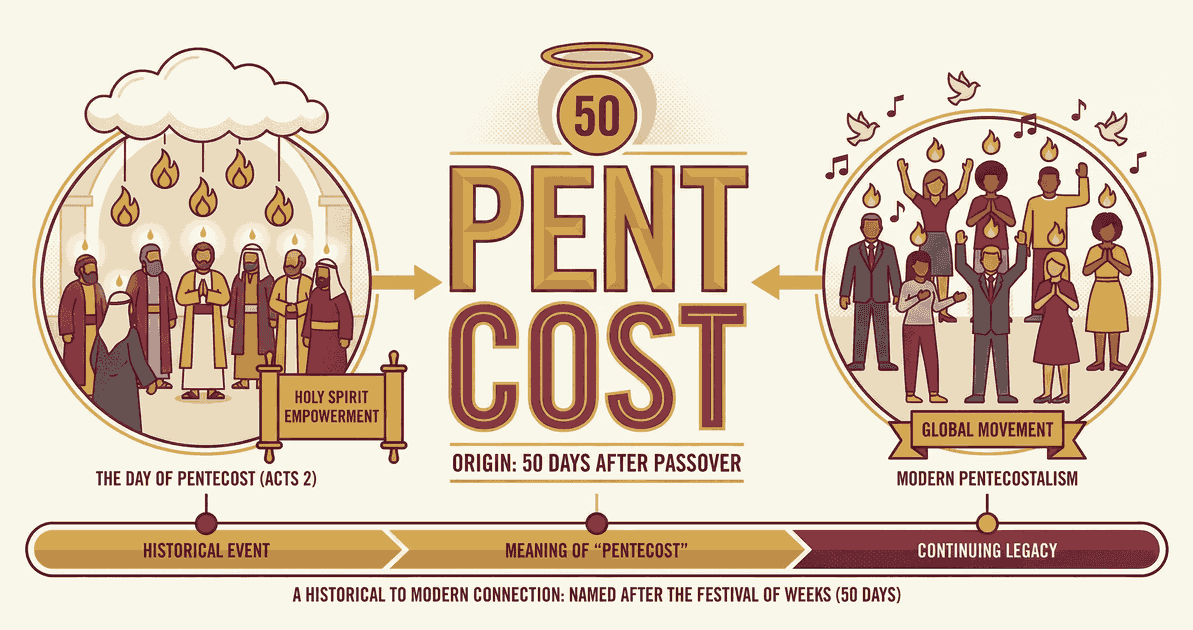
"Pentecost" comes from the Greek word pentēkostē, meaning "fiftieth." It refers to the Jewish festival celebrated 50 days after Passover:
- Hebrew name: Shavuot (Feast of Weeks)
- Celebration: First harvest, later associated with receiving the Torah
- Timing: 50 days after Passover (7 weeks + 1 day)
The Christian Pentecost
For Christians, Pentecost has become synonymous with the events of Acts 2:
"When the day of Pentecost came, they were all together in one place. Suddenly a sound like the blowing of a violent wind came from heaven and filled the whole house... They saw what seemed to be tongues of fire that separated and came to rest on each of them. All of them were filled with the Holy Spirit and began to speak in other tongues as the Spirit enabled them." — Acts 2:1-4
This event marks the birth of the Church and the beginning of the Spirit-empowered age.
Why Pentecostals Identify with This Event
1. The Holy Spirit's Power
Pentecostals believe Acts 2 establishes a pattern for all believers:
- The Holy Spirit empowers for witness (Acts 1:8)
- The experience is dramatic and transformative
- It's available to all, not just apostles
2. Speaking in Tongues
Tongues on the Day of Pentecost became the identifying mark of the modern movement:
- First occurrence of Christian glossolalia
- Seen as initial evidence of Spirit baptism
- Central to Pentecostal identity
3. Restoration of New Testament Christianity
Pentecostals believe they're experiencing what the early church experienced—hence the connection to Pentecost.
History of the Name
Early Pentecostalism (1901-1914)
The modern Pentecostal movement began with events like:
- 1901 — Charles Parham's Bible school in Topeka, Kansas, where Agnes Ozman spoke in tongues
- 1906 — The Azusa Street Revival in Los Angeles, led by William Seymour
Early participants needed a name for their experience. "Pentecostal" naturally emerged from their emphasis on the Acts 2 experience.
The Name Spreads
- "Pentecostal" highlighted the connection to Acts 2
- "Full Gospel" emphasized believing the whole Bible, including miracles
- "Apostolic" stressed return to apostolic practices
- "Holiness-Pentecostal" reflected roots in the Holiness movement
Different groups used different names, but "Pentecostal" became the most common umbrella term.
What the Name Emphasizes
Experience of the Spirit
Unlike denominational names based on founders (Lutheran, Wesleyan) or governance (Presbyterian, Congregational), "Pentecostal" points to an experience—the baptism in the Holy Spirit.
Biblical Identity
The name roots the movement in Scripture. Pentecostals see themselves as continuing what began in Acts 2.
Expectation
The name implies expectation—that what happened at Pentecost can happen today.
Other Names for Pentecostals
Spirit-Filled
Emphasizes the central role of the Holy Spirit.
Full Gospel
Believers claim the "full" gospel, including healing, miracles, and spiritual gifts.
Charismatic
From the Greek charisma (gift). Used especially for Spirit-filled believers in mainline churches.
Apostolic
Emphasizes restoring apostolic practices. Often associated with Oneness Pentecostals.
Holy Rollers (Historical/Pejorative)
An old nickname from critics, referencing emotional expressions in worship. Not used by Pentecostals themselves.
Pentecostal vs. Charismatic vs. Third Wave
| Term | Meaning |
|---|---|
| Pentecostal | Members of specifically Pentecostal denominations (Assemblies of God, etc.) |
| Charismatic | Spirit-filled believers in mainline denominations (Catholic, Lutheran, etc.) |
| Third Wave/Neo-Charismatic | Independent churches emphasizing gifts, signs, and wonders |
All three movements share the emphasis on the Holy Spirit and spiritual gifts that traces back to Pentecost.
Why Does the Name Matter?
It Points to Scripture
The name constantly reminds Pentecostals that their identity is rooted in the Bible, not human tradition.
It Sets Expectations
When you call yourself "Pentecostal," you're saying you expect Acts 2 to be repeated today.
It Creates Unity
Despite many denominations and expressions, the name unites a diverse global movement around a shared experience.
Common Questions
Are all Christians who believe in spiritual gifts called Pentecostal?
Not necessarily. "Charismatic" often describes Spirit-filled believers who stay in non-Pentecostal denominations. "Pentecostal" usually refers to those in specifically Pentecostal churches.
Is "Pentecostal" in the Bible?
The word "Pentecostal" isn't in Scripture, but "Pentecost" is. The name derives from the biblical event.
When did people start using this name?
The name became common in the early 1900s as the modern movement emerged.
Do Pentecostals celebrate Pentecost Sunday?
Many do, though Pentecostals believe the power of Pentecost is available every day, not just one Sunday a year.
The Ongoing Pentecost
For Pentecostals, the name isn't just historical—it's aspirational. They believe:
"The promise is for you and your children and for all who are far off—for all whom the Lord our God will call." — Acts 2:39
The Day of Pentecost wasn't a one-time event but the beginning of an ongoing outpouring that continues today.
Have more questions about Pentecostalism?
"In the last days, God says, I will pour out my Spirit on all people." — Acts 2:17
Have questions about this topic?
Ask PentecostalGPT for personalized, Scripture-based guidance.