FAQ: Is Speaking in Tongues Necessary?
Addressing the common question about whether speaking in tongues is required for salvation or as evidence of Spirit baptism.
One of the most frequently asked questions about Pentecostal belief concerns speaking in tongues. Is it necessary? Let's examine this carefully.
Two Different Questions
First, we need to distinguish between two different questions:
- Is speaking in tongues necessary for salvation?
- Is speaking in tongues the initial evidence of the baptism in the Holy Spirit?
These are very different questions with different answers.
Tongues and Salvation
Speaking in tongues is NOT required for salvation.
Salvation comes through faith in Jesus Christ alone:
"For it is by grace you have been saved, through faith—and this is not from yourselves, it is the gift of God." — Ephesians 2:8
A person is saved by believing in Jesus, confessing Him as Lord, and receiving forgiveness of sins (Romans 10:9-10). The gift of tongues is not a requirement for entering God's family.
This is a point all major Pentecostal denominations agree on clearly.
Tongues and Spirit Baptism
The distinct Pentecostal position is that speaking in tongues is the initial physical evidence of the baptism in the Holy Spirit—a subsequent experience to salvation.
This is based on the pattern in Acts:
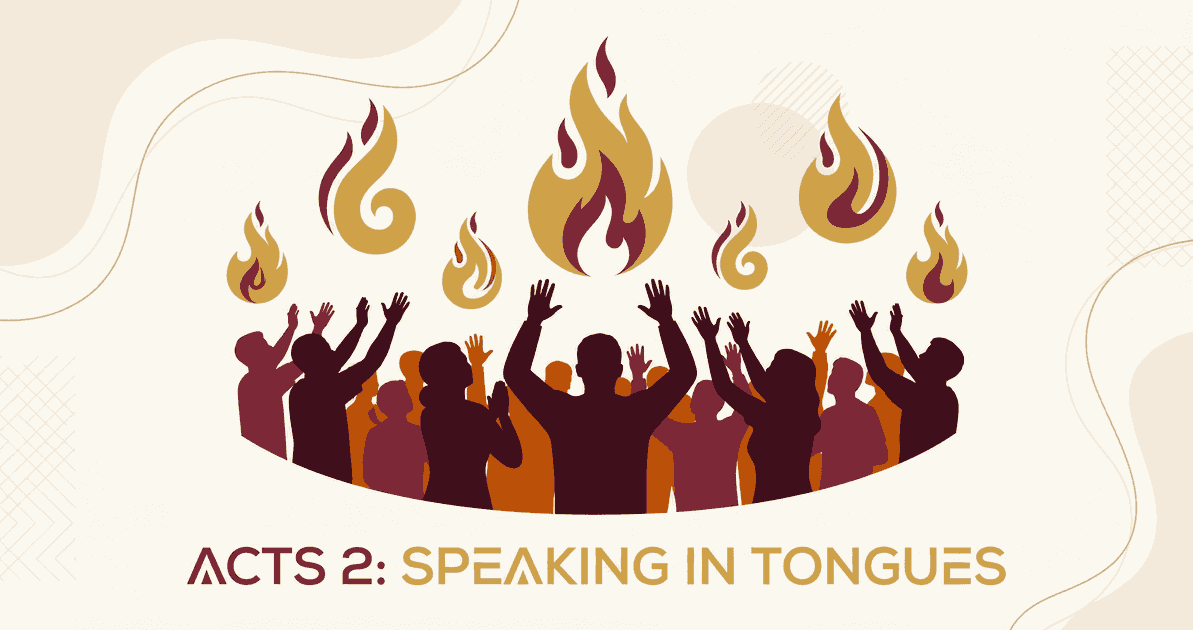
Acts 2 (Pentecost)
"All of them were filled with the Holy Spirit and began to speak in other tongues as the Spirit enabled them." — Acts 2:4
Acts 10 (Cornelius)
"The gift of the Holy Spirit had been poured out even on the Gentiles. For they heard them speaking in tongues and praising God." — Acts 10:45-46
Acts 19 (Ephesus)
"When Paul placed his hands on them, the Holy Spirit came on them, and they spoke in tongues and prophesied." — Acts 19:6
The pattern suggests that tongues was the observable sign that confirmed the Spirit had been received.
Different Views Within Christianity
It's important to acknowledge that Christians hold different views:
Classical Pentecostal View: Tongues is the initial evidence of Spirit baptism, following the pattern of Acts.
Charismatic View: Tongues is one possible evidence among others, and Spirit baptism may be accompanied by various gifts.
Non-Charismatic View: All believers receive the Spirit at conversion, and tongues was a first-century phenomenon.
What the Bible Says About Tongues
Several things are clear from Scripture:
- Tongues is a legitimate spiritual gift (1 Corinthians 12:10, 28)
- Not all believers may speak in tongues in the gift form used in church services (1 Corinthians 12:30)
- Tongues edifies the speaker (1 Corinthians 14:4)
- We should not forbid speaking in tongues (1 Corinthians 14:39)
- Tongues is for believers as a sign (1 Corinthians 14:22)
A Balanced Approach
Here's what we suggest:
- Don't make tongues a test of salvation. It's not.
- Do seek the fullness of the Spirit. Jesus told believers to wait for "power from on high" (Luke 24:49).
- Be open to however God manifests His presence. Don't limit Him.
- Study the Scriptures yourself. Come to your own Spirit-led conviction.
- Don't judge others. Whether they speak in tongues or not.
The Bottom Line
Is speaking in tongues necessary?
- For salvation: No.
- As evidence of Spirit baptism: Pentecostals say yes, based on the Acts pattern.
But more important than theological positions is this: Are you filled with the Spirit? Are you walking in the power Jesus promised?
That's the heart of what Pentecostals are seeking—not a doctrine to debate, but a Person to know and a power to experience.
Have more questions? Ask PentecostalGPT for biblical, thoughtful answers.
Have questions about this topic?
Ask PentecostalGPT for personalized, Scripture-based guidance.