Pentecostal Worship Explained: Style, Expressions, and What the Bible Says
Why Pentecostals worship expressively—biblical basis, common practices, and what to expect in a Pentecostal service.
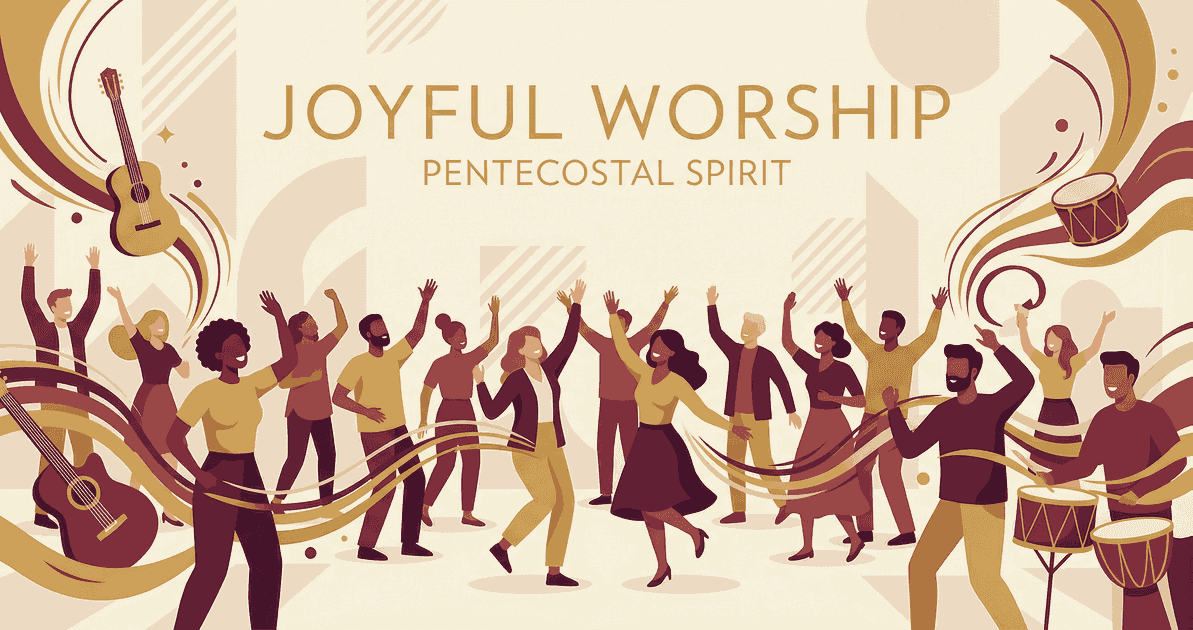
Pentecostal worship is known for its energy, expression, and sense of encounter with God. But why do Pentecostals worship the way they do? Let's explore the biblical basis and practical expressions of Spirit-filled worship.
What Makes Pentecostal Worship Different?
Pentecostal worship is characterized by:
- Freedom of expression — Physical, vocal, emotional
- Expectation of encounter — Anticipating God's presence
- Spirit-led spontaneity — Room for the unexpected
- Extended worship — Not rushed
- Participation — Congregation actively involved
"God is spirit, and his worshipers must worship in the Spirit and in truth." — John 4:24
Biblical Foundations for Expressive Worship
Raised Hands
"Lift up your hands in the sanctuary and praise the Lord." — Psalm 134:2
"I want the men everywhere to pray, lifting up holy hands." — 1 Timothy 2:8
Clapping
"Clap your hands, all you nations; shout to God with cries of joy." — Psalm 47:1
Dancing
"Let them praise his name with dancing." — Psalm 149:3
"David danced before the Lord with all his might." — 2 Samuel 6:14
Shouting
"Shout for joy to the Lord, all the earth." — Psalm 100:1
Kneeling and Prostrating
"Come, let us bow down in worship, let us kneel before the Lord our Maker." — Psalm 95:6
Singing in the Spirit
"I will sing with my spirit, but I will also sing with my understanding." — 1 Corinthians 14:15
Common Worship Expressions
Physical Expressions
| Expression | Biblical Basis | Meaning |
|---|---|---|
| Raised hands | Psalm 63:4 | Surrender, praise, reaching for God |
| Clapping | Psalm 47:1 | Joyful celebration |
| Dancing | Psalm 149:3 | Exuberant praise |
| Kneeling | Psalm 95:6 | Reverence, submission |
| Prostration | Revelation 4:10 | Total worship |
| Flags/banners | Psalm 20:5 | Proclamation, warfare |
Vocal Expressions
- Singing — Hymns, choruses, spiritual songs
- Shouting — Praise to God
- Speaking in tongues — Spirit-led prayer language
- Prophecy — Messages from God
- Spontaneous praise — Unscripted adoration
Musical Styles
Pentecostal churches vary widely in music:
- Contemporary worship — Modern songs (Hillsong, Bethel, Elevation)
- Traditional hymns — Especially in older churches
- Gospel — Rich tradition in Black Pentecostal churches
- Global music — Latino, African, Asian styles
- Spontaneous songs — Singing in the Spirit
The Structure of Pentecostal Worship
While spontaneity is valued, most services have a general flow:
1. Gathering (5-10 min)
- Welcome and announcements
- Opening prayer
- Invocation of God's presence
2. Praise (15-20 min)
- Upbeat, celebratory songs
- Thanksgiving and rejoicing
- Physical expression (clapping, dancing)
3. Worship (20-30 min)
- Slower, intimate songs
- Focus on God's nature and presence
- Extended instrumental moments
- Space for spontaneous expressions
4. Ministry Time (variable)
- Prophecy or words of knowledge
- Altar calls
- Prayer for healing or needs
- Spiritual gifts in operation
5. Word (30-45 min)
- Sermon/teaching
- Scripture focus
- Application
6. Response (10-20 min)
- Altar call for salvation
- Prayer ministry
- Ministry to specific needs
Understanding "Entering In"
Pentecostals speak of "entering into worship" or "pressing in":
The Tabernacle Model
Some describe worship using tabernacle imagery:
- Outer courts — Thanksgiving, praise (Psalm 100:4)
- Holy Place — Deeper worship, ministry
- Holy of Holies — Intimate presence, encounter
Progressive Worship
Worship often progresses from:
- Celebration → Adoration → Intimacy
- Singing about God → Singing to God
- Head knowledge → Heart encounter
The Role of the Holy Spirit
Spirit-Led Worship
"Be filled with the Spirit, speaking to one another with psalms, hymns, and songs from the Spirit." — Ephesians 5:18-19
The Spirit:
- Prompts worship
- Gives utterance (tongues, prophecy)
- Creates atmosphere for encounter
- Convicts and transforms
Gifts in Worship
Spiritual gifts often operate during worship:
- Prophecy — A message from God
- Tongues and interpretation — Spirit-given language with meaning
- Words of knowledge — Supernatural insight
- Healing — God touching bodies
Common Questions About Pentecostal Worship
Why do people raise their hands?
Raised hands symbolize surrender, reaching toward God, and offering praise. It's a biblical posture found throughout the Psalms.
Why does worship go so long?
Pentecostals believe relationship takes time. Extended worship allows deeper encounter with God rather than rushing through.
Is emotional worship genuine?
Emotions are part of being human. The Bible describes worshipers weeping, shouting, and rejoicing. Genuine worship often involves emotions, though emotions alone don't equal authenticity.
Do I have to participate physically?
No. Worship is personal. Participate at your comfort level. God looks at the heart, not the performance.
What if I don't feel anything?
Worship isn't about feelings—it's about honoring God. Feelings may or may not accompany worship. Faithful worship is valuable even when dry.
Is this just emotionalism?
Genuine Pentecostal worship is grounded in:
- Biblical truth
- Sound theology
- Heart surrender
- Spirit leading
Emotionalism without these is empty; emotion with these is appropriate.
Worship in Personal Devotion
You don't need a band to worship:
Daily Worship Practices
- Play worship music — Create atmosphere
- Sing along — Even if you can't sing well
- Pray in tongues — If you have this gift
- Read Psalms aloud — Scripture as worship
- Declare God's attributes — Speak His praises
- Silence — Quiet contemplation
Creating a Worship Space
- Minimize distractions
- Have Scripture available
- Use worship playlists
- Consider posture (kneeling, standing)
- Dedicate consistent time
Healthy vs. Unhealthy Worship Cultures
Healthy Signs
- ✅ Scripture-centered
- ✅ Focus on Jesus
- ✅ Genuine freedom (no pressure)
- ✅ Orderly (1 Cor 14:40)
- ✅ Bearing spiritual fruit
Unhealthy Signs
- ❌ Manipulation (guilt, pressure)
- ❌ Performance focus
- ❌ Chaotic disorder
- ❌ Human-centered (pastor worship)
- ❌ Neglecting the Word
Learn More
Worship is a lifelong journey of discovery. Each encounter with God can take you deeper.
Have questions about Pentecostal worship?
"Yet a time is coming and has now come when the true worshipers will worship the Father in the Spirit and in truth, for they are the kind of worshipers the Father seeks." — John 4:23
Have questions about this topic?
Ask PentecostalGPT for personalized, Scripture-based guidance.