What Is Pentecost? Meaning, Bible Verses, and Why Pentecostals Celebrate It
What Pentecost is, what happened in Acts 2, and why it matters in Pentecostal faith today.
What is Pentecost? For millions of Christians, Pentecost isn't just a historical event—it's the birthday of the Church and the model for Spirit-filled living today. Let's explore what happened, why it matters, and how it shapes Pentecostal faith.
Quick Answer: What Is Pentecost?
Pentecost refers to:
- A Jewish festival — Fifty days after Passover (Shavuot/Feast of Weeks)
- The Day of Pentecost (Acts 2) — When the Holy Spirit was poured out on the early church
- A Christian celebration — Commemorating the Spirit's coming (Pentecost Sunday)
The word "Pentecost" comes from the Greek pentēkostē, meaning "fiftieth."
Pentecost in the Old Testament
The Feast of Weeks (Shavuot)
Before it became associated with the Holy Spirit, Pentecost was already significant in Jewish life.
Three Names:
- Feast of Weeks — Seven weeks after Passover
- Shavuot — Hebrew for "weeks"
- Feast of Harvest/Firstfruits — Celebrated the grain harvest
Biblical Commands:
"Count off fifty days up to the day after the seventh Sabbath, and then present an offering of new grain to the Lord." — Leviticus 23:16
What Jews Celebrated:
- Agricultural thanksgiving — Firstfruits of wheat harvest
- Torah giving — Later associated with receiving the Law at Sinai
- Covenant renewal — Remembering God's faithfulness
The Connection: God chose this harvest festival—when Jerusalem was full of pilgrims—to pour out His Spirit. The "firstfruits" of the spiritual harvest began on the day of agricultural firstfruits!
The Day of Pentecost (Acts 2)
Setting the Scene
After Jesus' resurrection and ascension, He commanded the disciples:
"Do not leave Jerusalem, but wait for the gift my Father promised... you will be baptized with the Holy Spirit." — Acts 1:4-5
The disciples waited and prayed for ten days.
What Happened
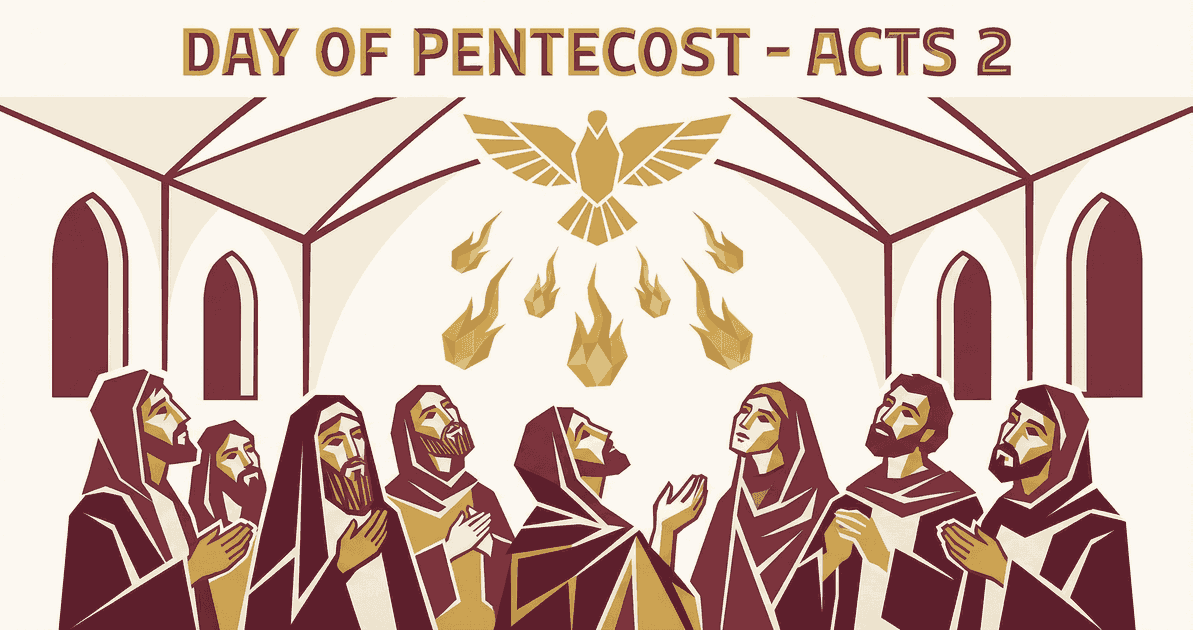
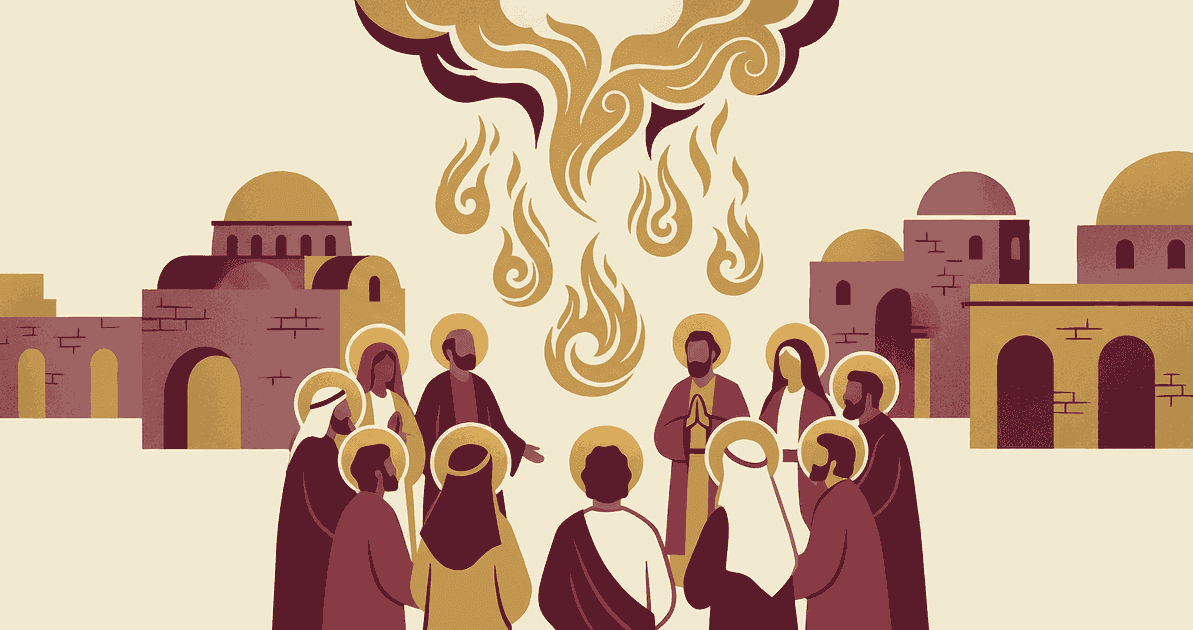
"When the day of Pentecost came, they were all together in one place. Suddenly a sound like the blowing of a violent wind came from heaven and filled the whole house where they were sitting. They saw what seemed to be tongues of fire that separated and came to rest on each of them. All of them were filled with the Holy Spirit and began to speak in other tongues as the Spirit enabled them." — Acts 2:1-4
Key Elements
1. Sound of Wind
- Represents the Spirit (pneuma means both "wind" and "spirit")
- Recalls God's presence in the Old Testament (1 Kings 19:11-12)
2. Tongues of Fire
- Visible symbol of God's presence
- Rested on each person — the Spirit is for all
- Fire represents purification and power
3. Speaking in Tongues
- They spoke in languages they had not learned
- Visitors from many nations heard in their own tongues
- A reversal of Babel — God gathering, not scattering
4. The Crowd's Reaction
"We hear them declaring the wonders of God in our own tongues!" — Acts 2:11
Some were amazed; others accused them of drunkenness.
Peter's Sermon (Acts 2:14-41)
Peter explained what was happening by quoting the prophet Joel:
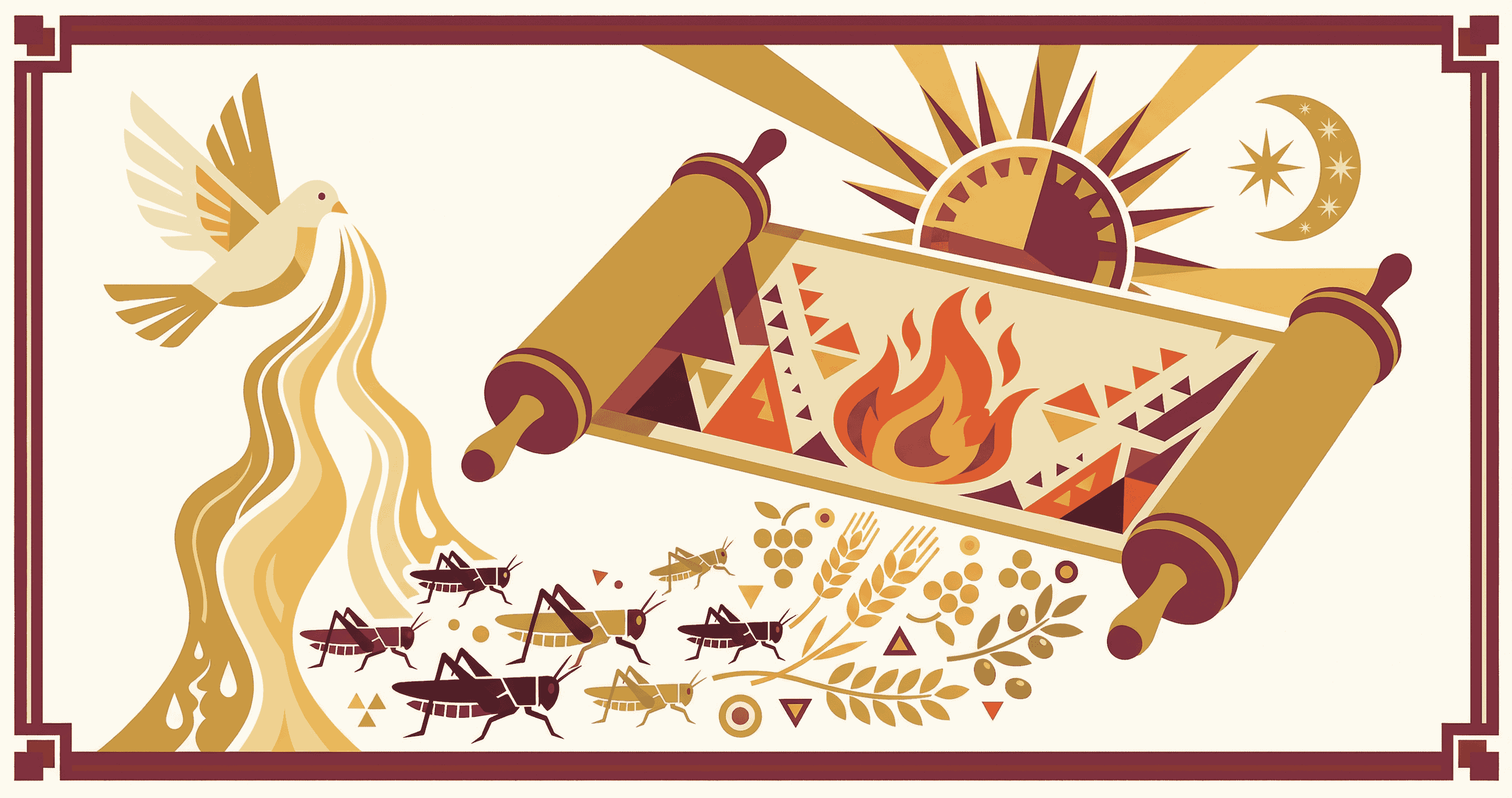
"In the last days, God says, I will pour out my Spirit on all people. Your sons and daughters will prophesy, your young men will see visions, your old men will dream dreams." — Acts 2:17 (Joel 2:28)
Key points of Peter's message:
- This is what Joel prophesied
- Jesus of Nazareth is Lord and Messiah
- You crucified Him, but God raised Him
- Repent and be baptized for forgiveness
- Receive the gift of the Holy Spirit
The result: About 3,000 people were saved and baptized that day!
Timeline: From Passover to Pentecost
| Day | Event |
|---|---|
| Day 1 | Passover — Jesus crucified |
| Day 3 | Resurrection — Jesus rises |
| Day 3-43 | Resurrection appearances (40 days) |
| Day 43 | Ascension — Jesus returns to heaven |
| Day 43-50 | Disciples pray and wait |
| Day 50 | Pentecost — Spirit poured out |
The timing is significant:
- 50 days from Passover lamb to Spirit's coming
- The Law was given 50 days after Exodus
- Now the Spirit is given to write the law on hearts (Jeremiah 31:33)
Why Pentecost Matters
1. Birth of the Church
Pentecost marks the beginning of the New Testament church. Before Pentecost, the disciples were a small group of believers. After Pentecost, they became a Spirit-empowered movement that changed the world.
2. Fulfillment of Prophecy
Multiple prophecies converged:
- Joel 2:28-32 — Spirit poured out on all flesh
- Ezekiel 36:26-27 — New hearts and God's Spirit within
- Jeremiah 31:33 — Law written on hearts
- Isaiah 44:3 — Spirit poured out like water
- John the Baptist (Matthew 3:11) — One coming who baptizes with Spirit and fire
3. The Spirit for Everyone
Before Pentecost, the Spirit came on select individuals (prophets, kings, judges). After Pentecost, the Spirit is available to all believers:
"The promise is for you and your children and for all who are far off—for all whom the Lord our God will call." — Acts 2:39
4. Power for Mission
Jesus had said:
"You will receive power when the Holy Spirit comes on you; and you will be my witnesses in Jerusalem, and in all Judea and Samaria, and to the ends of the earth." — Acts 1:8
Pentecost equipped the church for its global mission.
What the Early Church Looked Like
After Pentecost, the church was characterized by:
"They devoted themselves to the apostles' teaching and to fellowship, to the breaking of bread and to prayer... All the believers were together and had everything in common... Every day they continued to meet together in the temple courts. They broke bread in their homes and ate together with glad and sincere hearts, praising God and enjoying the favor of all the people. And the Lord added to their number daily those who were being saved." — Acts 2:42-47
Key practices:
- Apostles' teaching (doctrine)
- Fellowship (community)
- Breaking of bread (communion)
- Prayer
- Signs and wonders
- Generosity
- Daily gathering
- Worship and praise
- Evangelism
Pentecost Sunday Today
When Is It?
Pentecost Sunday falls 50 days after Easter Sunday (7 weeks + 1 day). It moves each year with Easter.
Upcoming dates:
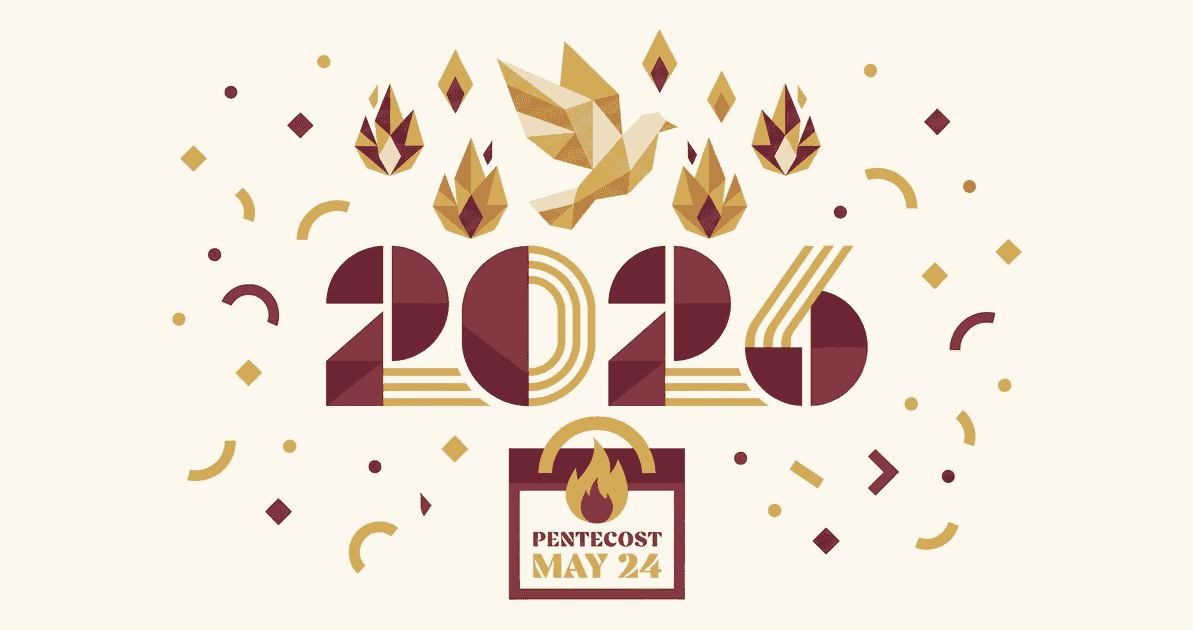
- 2026: May 24
- 2027: May 16
- 2028: June 4
How Christians Celebrate
- Red vestments/decorations — Symbolizing fire
- Scripture readings — Acts 2, Joel 2, John 14-16
- Hymns — "Spirit of the Living God," "Come Holy Spirit"
- Confirmation — Some traditions confirm members on Pentecost
- Special prayers — Invoking the Spirit's fresh work
- Birthday celebrations — "Happy Birthday, Church!"
Pentecostal Emphasis
For Pentecostals, every Sunday is in some sense "Pentecost Sunday." The movement takes its name from this event because:
- The experience of Acts 2 is normative for today
- Spirit baptism is available to every believer
- Spiritual gifts are active in the church
- The power of Pentecost is needed for mission
Lessons from Pentecost
1. Unity Matters
"They were all together in one place." — Acts 2:1
The Spirit came when believers gathered in unity. Division grieves the Spirit.
2. Waiting on God Has Value
The disciples waited 10 days in prayer. Pentecost wasn't manufactured—it was received.
3. The Spirit Makes Bold Witnesses
Peter, who denied Jesus three times, now preaches boldly to thousands. The Spirit transforms timidity into courage.
4. God Wants to Include Everyone
The multicultural, multilingual nature of Pentecost shows God's heart for all peoples.
5. Authentic Power Produces Results
3,000 converts in one day—this is what Spirit-empowered ministry looks like.
Frequently Asked Questions
Is Pentecost a Christian or Jewish holiday?
Both! It originated as the Jewish Feast of Weeks (Shavuot) and became significant for Christians through the events of Acts 2.
Do Pentecostals celebrate Pentecost Sunday?
Many do, though Pentecostals emphasize that the Spirit's power is available every day, not just one Sunday a year.
Is the "baptism of the Holy Spirit" the same as being saved?
Most Pentecostals see them as distinct experiences. All believers have the Spirit (Romans 8:9), but Spirit baptism is an additional empowerment for service.
Did speaking in tongues only happen at Pentecost?
No. It occurred multiple times in Acts (8:14-17, 10:44-46, 19:1-6) and Paul discusses it extensively in 1 Corinthians 12-14.
Why is Pentecost called the "birthday of the Church"?
Before Pentecost, believers were scattered followers. At Pentecost, the Spirit formed them into one body—the Church was born.
Experience Your Own Pentecost
The early disciples received power that transformed their lives and the world. That same Spirit is available today.
"The promise is for you and your children and for all who are far off." — Acts 2:39
Want to learn more about receiving the Holy Spirit's power?
Ask PentecostalGPT about the Holy Spirit →
"Repent and be baptized, every one of you, in the name of Jesus Christ for the forgiveness of your sins. And you will receive the gift of the Holy Spirit." — Acts 2:38
Have questions about this topic?
Ask PentecostalGPT for personalized, Scripture-based guidance.