What Do Oneness Pentecostals Believe? Theology, Practices, and FAQs
Understand Oneness Pentecostal beliefs about God, baptism, salvation, and how they differ from Trinitarian Pentecostals.
Oneness Pentecostalism is a significant movement within the Pentecostal family that holds a distinct view of God. This guide explains what Oneness Pentecostals believe and addresses common questions.
What Is Oneness Pentecostalism?
Oneness Pentecostalism (also called "Jesus Only" or "Apostolic") teaches:
- God is absolutely one — Not three persons but one divine being
- Jesus is the one God — Father, Son, and Spirit are manifestations of Jesus
- Baptism in Jesus' name — Not the Trinitarian formula
- Tongues as essential — Evidence of receiving the Holy Spirit
The Oneness View of God
God Is One, Not Three
Oneness believers emphasize:
"Hear, O Israel: The Lord our God, the Lord is one." — Deuteronomy 6:4
"I and the Father are one." — John 10:30
They reject the Trinity doctrine, viewing "Father," "Son," and "Holy Spirit" as titles or modes of the one God (Jesus), not as distinct persons.
Jesus Is the Fullness of God
"For in Christ all the fullness of the Deity lives in bodily form." — Colossians 2:9
Oneness theology teaches:
- Father = God as Creator and invisible Spirit
- Son = God manifest in human flesh (Jesus)
- Holy Spirit = God in action, indwelling believers
- All three are the same person: Jesus
How They Explain Biblical Passages
Jesus praying to the Father (John 17):
- The human nature of Jesus (Son) prayed to His divine nature (Father)
Baptism of Jesus (Matthew 3:16-17):
- The voice was God speaking from heaven about His human manifestation
- The dove symbolized the Spirit, not a separate person
"Let us make man" (Genesis 1:26):
- God speaking to angels, or a "plural of majesty"
Salvation in Oneness Teaching
The "Full Gospel" — Acts 2:38
Most Oneness groups teach salvation requires:
"Repent and be baptized, every one of you, in the name of Jesus Christ for the forgiveness of your sins. And you will receive the gift of the Holy Spirit." — Acts 2:38
Three essential steps:
- Repentance — Turning from sin to God
- Water baptism in Jesus' name — For remission of sins
- Spirit baptism — With evidence of speaking in tongues
Is This Works-Salvation?
Oneness believers would say no:
- Salvation is still by grace through faith
- Obedience to Acts 2:38 is the response of faith
- Baptism and Spirit-reception are not "earning" salvation
Critics argue this adds requirements beyond faith alone.
Baptism in Jesus' Name
Why Not "Father, Son, Holy Spirit"?
Oneness Pentecostals note:
- Every baptism in Acts uses "Jesus' name" (Acts 2:38, 8:16, 10:48, 19:5)
- "In the name of" means "by the authority of"
- Jesus' name is the name of the Father, Son, and Spirit
The Oneness Interpretation of Matthew 28:19
"Go and make disciples of all nations, baptizing them in the name of the Father and of the Son and of the Holy Spirit."
They argue:
- "Name" is singular — one name for all three
- That name is Jesus
- The apostles understood this, hence baptizing in Jesus' name
Tongues as Essential Evidence
Oneness churches typically teach:
- Speaking in tongues is the necessary evidence of receiving the Holy Spirit
- Without tongues, one has not received the Spirit
- Without the Spirit, salvation is incomplete
"All of them were filled with the Holy Spirit and began to speak in other tongues." — Acts 2:4
This is stronger than mainstream Pentecostal teaching, which sees tongues as initial evidence but not absolutely required for salvation.
Holiness Standards
Many (not all) Oneness churches emphasize:
For Women
- No cutting hair (1 Corinthians 11)
- No pants (Deuteronomy 22:5 interpreted as gender-specific clothing)
- No jewelry or makeup (or minimal)
- Modest, long dresses/skirts
For Men
- Short hair
- No beards (in some groups)
- Modest dress
General
- No worldly entertainment
- Separation from "sinful" culture
- Strong community accountability
Standards vary—some Oneness churches are stricter than others.
Major Oneness Denominations
| Denomination | Members (est.) | Notes |
|---|---|---|
| United Pentecostal Church International (UPCI) | 5+ million | Largest, stricter standards |
| Pentecostal Assemblies of the World (PAW) | 1.5+ million | Historically Black, may be more moderate |
| Assemblies of the Lord Jesus Christ | 50,000+ | Smaller, conservative |
| Church of Our Lord Jesus Christ | — | Founded by R.C. Lawson |
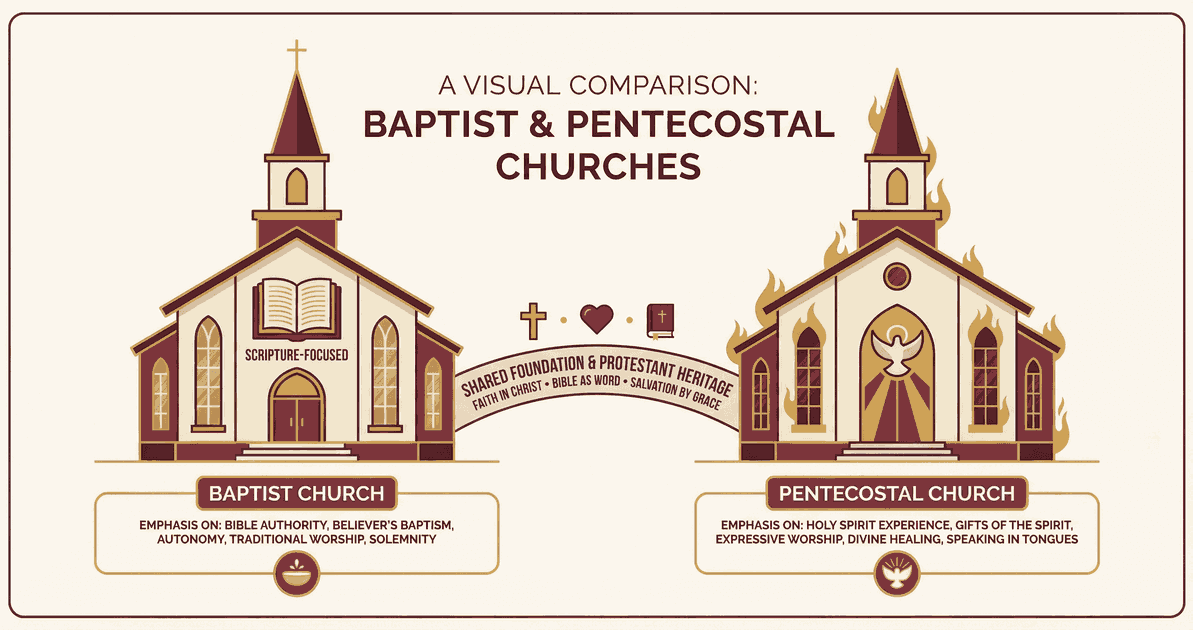
Comparison: Oneness vs. Trinitarian
| Belief | Oneness | Trinitarian |
|---|---|---|
| Godhead | One person (Jesus) in three modes | Three persons, one essence |
| Baptism | In Jesus' name only | Father, Son, Holy Spirit (or Jesus' name) |
| Salvation requires | Repentance + baptism + Spirit (tongues) | Faith in Christ; baptism and Spirit encouraged |
| Tongues | Necessary for salvation | Evidence, not salvation requirement |
Theological Assessment
Concerns from Orthodox Christianity
Oneness theology is considered modalist (or Sabellian) — an ancient heresy rejected by church councils:
- Historically rejected — Church fathers and councils affirmed three persons
- Biblical evidence — Passages showing simultaneous distinction (Matthew 3:16-17; Jesus' prayers)
- Relationship language — The Son "loves" the Father; can one person love himself?
Oneness Response
- Scripture over tradition — Councils can err
- Reinterpret problem passages — Human vs. divine nature distinction
- Fruit defense — Changed lives demonstrate authentic faith
Visiting a Oneness Church
What to Expect
- Warm, welcoming community
- Energetic worship with tongues
- Long services (2+ hours)
- Strong emphasis on prayer
- Altar calls for salvation and Spirit baptism
Dress
- Visitors welcomed regardless of attire
- Members follow stricter standards
- Conservative dress is appreciated
Common Questions
Are Oneness Pentecostals Christians?
This is debated:
- They affirm: Jesus as Lord, salvation through Him, biblical authority
- They deny: The historic Christian understanding of the Trinity
Most evangelical theologians consider Oneness theology outside orthodox Christianity, though they acknowledge many Oneness believers have genuine faith in Jesus.
Can Oneness believers be saved?
God judges hearts, not theological precision. Many argue sincere Oneness believers who trust Jesus may be saved despite theological error. Others maintain the errors are too significant.
Why do they call it "Jesus Only"?
Because Jesus' name alone is used in baptism, and Jesus is seen as the one God. Critics use this term; adherents prefer "Apostolic" or "Oneness."
Are all Apostolic churches Oneness?
No. "Apostolic" can refer to any church seeking to restore New Testament practices. Some Apostolic churches are Trinitarian.
For Those Exploring
If you're considering Oneness Pentecostalism:
- Study the Bible carefully — Especially passages on the Godhead
- Read church history — How did early Christians understand God?
- Ask hard questions — Good churches welcome sincere inquiry
- Evaluate by fruit — Are lives being transformed by Christ?
- Pray earnestly — Ask God for wisdom and guidance
Want to explore these questions further?
"For there is one God and one mediator between God and mankind, the man Christ Jesus." — 1 Timothy 2:5
Have questions about this topic?
Ask PentecostalGPT for personalized, Scripture-based guidance.