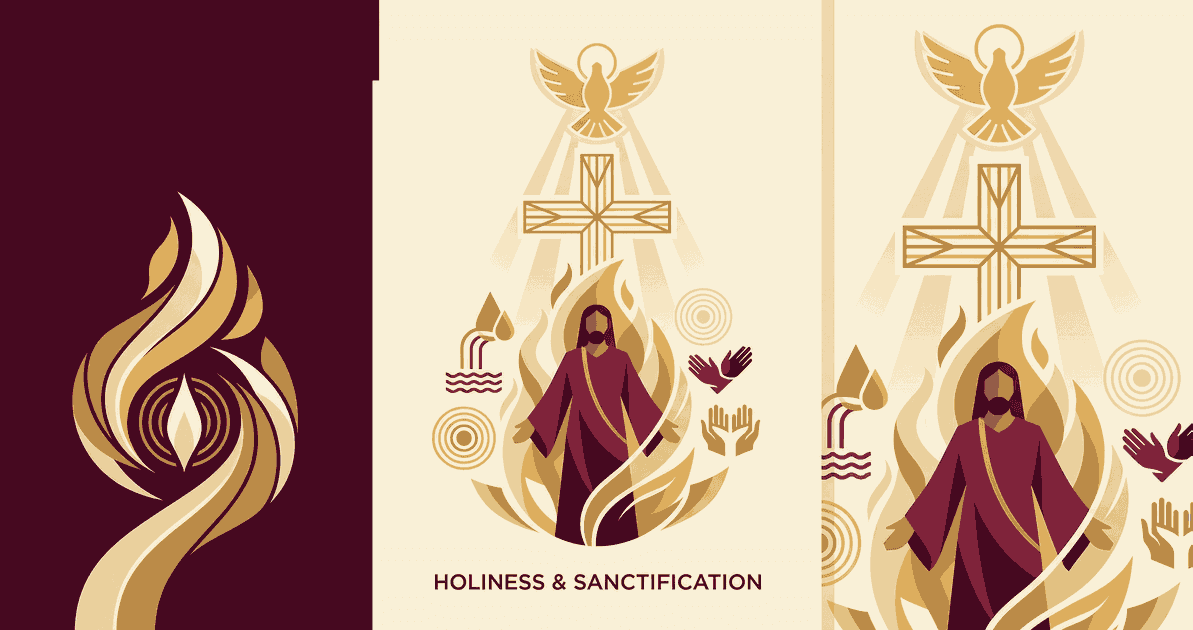
Holiness and Sanctification: The Pentecostal View
Understanding what Pentecostals believe about holiness, sanctification, and living a Spirit-empowered life set apart for God.
Holiness has always been central to Pentecostal faith. Many early Pentecostals came from Holiness backgrounds, and the emphasis on Spirit-empowered holy living continues today.
What is Holiness?
God's Holiness
"Holy, holy, holy is the LORD Almighty." — Isaiah 6:3
God's holiness means He is:
- Separate — Distinct from creation, utterly other
- Pure — Completely without sin or imperfection
- Perfect — The standard of all moral excellence
Our Call to Holiness
"Be holy, because I am holy." — 1 Peter 1:16
We're called to reflect God's character in our lives.
What is Sanctification?
Sanctification (from Latin sanctus, "holy") means being set apart for God's purposes and being made holy.
Three Aspects
Positional Sanctification — At conversion, we are set apart as God's people. This is immediate and complete.
"You were washed, you were sanctified, you were justified in the name of the Lord Jesus Christ." — 1 Corinthians 6:11
Progressive Sanctification — Throughout life, we grow in holiness. This is gradual and ongoing.
"We... are being transformed into his image with ever-increasing glory." — 2 Corinthians 3:18
Final Sanctification — At Christ's return or our death, sanctification will be complete.
"When Christ appears, we shall be like him." — 1 John 3:2
Holiness in Pentecostal History
The Holiness Movement Roots
Many Pentecostal pioneers came from the Holiness movement, which emphasized:
- A "second blessing" of entire sanctification
- Clean living and separation from worldliness
- Victory over sin through the Spirit
The Pentecostal Addition
Pentecostals added emphasis on:
- The baptism in the Holy Spirit (often seen as a "third blessing")
- Power for service, not just purity
- Spiritual gifts empowering holy living
Historical Distinctives
Early Pentecostals often had strict standards regarding:
- Modest dress
- Abstinence from alcohol and tobacco
- Entertainment choices
- Worldly associations
The Biblical Balance
Not Legalism
Holiness isn't about rule-keeping to earn God's favor. We're saved by grace.
"It is for freedom that Christ has set us free. Stand firm, then, and do not let yourselves be burdened again by a yoke of slavery." — Galatians 5:1
Not License
Freedom isn't permission to sin.
"What shall we say, then? Shall we go on sinning so that grace may increase? By no means!" — Romans 6:1-2
Spirit-Empowered Living
True holiness comes through the Spirit's power working in us.
"Walk by the Spirit, and you will not gratify the desires of the flesh." — Galatians 5:16
Dimensions of Holiness
Inward Holiness
Transformation of heart, mind, and desires.
- Pure thoughts
- Right motives
- Loving attitudes
- Controlled emotions
Outward Holiness
Actions and lifestyle that honor God.
- Moral behavior
- Ethical dealings
- Modest living
- Speech that blesses
Relational Holiness
How we treat others.
- Love for neighbor
- Forgiveness
- Reconciliation
- Justice and mercy
Separation from Sin
What we avoid.
"Come out from them and be separate, says the Lord." — 2 Corinthians 6:17
This means avoiding sin, not avoiding sinners (Jesus was a friend of sinners).
How Sanctification Happens
Through the Word
"Sanctify them by the truth; your word is truth." — John 17:17
Scripture transforms our thinking.
Through the Spirit
"If by the Spirit you put to death the misdeeds of the body, you will live." — Romans 8:13
The Spirit empowers what the flesh cannot accomplish.
Through Community
"Spur one another on toward love and good deeds." — Hebrews 10:24
Fellow believers help us grow.
Through Trials
"We also glory in our sufferings, because we know that suffering produces perseverance; perseverance, character." — Romans 5:3-4
Difficulties refine us.
Through Practice
"Train yourself to be godly." — 1 Timothy 4:7
Spiritual disciplines build holy habits.
Common Misconceptions
"I Can't Be Holy"
You can't in your own strength—but the Spirit empowers you.
"Holiness is Boring"
Actually, sin is boring (the same old patterns). Holiness leads to abundant life.
"I'll Be Holy When I'm Older"
Start now. Every day matters.
"Holiness Means Perfection"
Perfection comes later. Holiness means direction—growing toward Christlikeness.
Practical Steps
- Examine yourself regularly — Where is growth needed?
- Confess sin promptly — Don't let it linger
- Feed on Scripture — Daily intake of God's Word
- Walk in the Spirit — Stay connected through prayer
- Choose your influences — Media, relationships, environments
- Find accountability — Others who encourage holiness
- Pursue love — Love is the fulfillment of the law
The Goal
"May God himself, the God of peace, sanctify you through and through. May your whole spirit, soul and body be kept blameless at the coming of our Lord Jesus Christ. The one who calls you is faithful, and he will do it." — 1 Thessalonians 5:23-24
God is committed to completing His work in you. He who began it will finish it.
Holiness isn't burdensome—it's the pathway to life, freedom, and joy.
Want to grow in holiness? Ask PentecostalGPT for biblical guidance and practical help.
Have questions about this topic?
Ask PentecostalGPT for personalized, Scripture-based guidance.